Download Light at the End of the Carpal Tunnel
Thousands of ready-books to read are provided in this site. We, as online library site will always offer more recent or late update of publications from lots of nations worldwide. It will lead you to reduce our means to seek for the variant kinds of books. Without travelling, without investing much money, as well as without investing much time end up being some benefits of taking books from this site. As well as right here, a Light At The End Of The Carpal Tunnel is one of the most recent book is welcome.
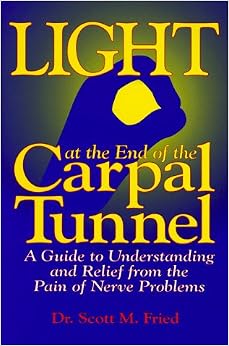
Light at the End of the Carpal Tunnel

Download Light at the End of the Carpal Tunnel
Just for you today! Discover your preferred e-book right here by downloading and install as well as getting the soft file of the book Light At The End Of The Carpal Tunnel This is not your time to generally visit guide establishments to purchase an e-book. Here, selections of publication Light At The End Of The Carpal Tunnel as well as collections are offered to download and install. One of them is this Light At The End Of The Carpal Tunnel as your favored e-book. Getting this e-book Light At The End Of The Carpal Tunnel by on the internet in this website can be recognized now by checking out the web link web page to download. It will be easy. Why should be here?
And to recommend you a better book with excellent quality, you could pick Light At The End Of The Carpal Tunnel Why we refer this book for you? We know that you are currently looking for the certified book pertaining to this topic. Hence, you can start it by getting this book as one of the chosen analysis book. It is not about the book that is composed by a very expert author or released by very popular author. This has to do with guide that is favourite one as well as impact for your demands.
Checking out books will not obligate you to complete it in a day. After your reading book currently, Light At The End Of The Carpal Tunnel can be the picked publication to be. We suggests due to the top quality of this book. It includes something brand-new as well as different. You may not have to think significantly, yet just check out and also you will certainly see why this book is much suggested.
Merely connect your tool computer or gadget to the internet attaching. Obtain the modern-day technology making your downloading and install Light At The End Of The Carpal Tunnel finished. Also you don't want to read, you can straight close the book soft file and open Light At The End Of The Carpal Tunnel it later. You could likewise effortlessly get guide almost everywhere, since Light At The End Of The Carpal Tunnel it remains in your gizmo. Or when remaining in the workplace, this Light At The End Of The Carpal Tunnel is additionally suggested to check out in your computer gadget.
A Guide to Understanding and Relief from the Pain of Nerve Problems.
A newly published book spells out in detail how people with carpal tunnel syndrome do not have to suffer needlessly, nor do they always have to think of surgery as their only help. Statistics show that fully, 50% of the half million Americans who undergo surgery for this ailment each year can obtain full or partial relief by more conservative treatment.
Read more
Product details
Mass Market Paperback: 208 pages
Publisher: Healing Books; 1 edition (January 1998)
Language: English
ISBN-10: 0965926753
ISBN-13: 978-0965926751
Product Dimensions:
6.2 x 0.5 x 9.2 inches
Shipping Weight: 14.2 ounces (View shipping rates and policies)
Average Customer Review:
3.4 out of 5 stars
3 customer reviews
Amazon Best Sellers Rank:
#4,254,119 in Books (See Top 100 in Books)
I really found myself interested in Dr. Scott M. Fried's book, Light at the End of the Carpal Tunnel: A Guide to Understanding and Relief from the Pain of Nerve Problems. (ISBN 0-9659267-5-3) Dr. Fried is an orthopedic surgeon, and compared to the ineffectual and poorly informed medicos often lamented on the SOREHAND e-mail list, he sounds like the doctor we all wish we had. That is, well informed, sympathetic, optimistic, committed to thorough and accurate diagnoses. He also emphasizes the importance of educating the patient, making informed decisions in partnership with the patient, and in not rushing to surgery unless there is a well-established end in doing so. This includes having realistic expectations of the outcome should surgery prove advisable. Although he says that if surgery is done "we have already lost the game," he posits situations where it can be useful.This is where this book is most useful. It is not like many RSI books that discuss the entire gamut of injury and treatment in detail; it is instead the valuable viewpoint of a surgeon who focuses on nerve injuries. As such, it excels, and much of the text is anecdotal accounts of patients, their injuries, decisions, and the outcomes. I learned a lot I did not know or had not considered. While he endorses a number of alternate therapies, he does not elaborate on them.A couple of themes ran through all of the patient stories, themes we all need to bear in mind. First of all, even when he describes patient outcomes considered successful, he cautions, "This is not a 'normal' arm." That is, patients may regain useful function and minimization of pain but are not "as good as new."Secondly, he is unflinching about repeating that no treatment can succeed if the patient is not removed from the injurious environment. He acknowledges the practical considerations that drive people to continue employment, but you won't find many details here about ergonomic equipment or such; he sticks with removing the patient from the injurious situation.Dr. Fried discusses reflexive sympathetic dystrophy (RSD) and its intractability. He suggests that in some cases of RSD or other pain syndromes where patients are relegated to pain management programs, there may well be an identifiable physiological cause underlying the problem that has not been correctly diagnosed. He suggests that in many cases it may be useful to start from the beginning with diagnostic workups.Dr. Fried is friendly, upbeat, and accessible in his writing. I found the relentless use of anecdotes made the book less focused than it might have been, and it might have done with some better editing. Too, I am not a big fan of Anthony Robbins or Napoleon Hill, whom he quotes on occasion, but I can forgive him that. On balance I think this book is well worth finding. It is NOT a replacement for a comprehensive RSI book like Pascarelli & Quilters Repetitive Strain Injury: A Computer User's Guide, but it is a valuable perspective on nerve problems and surgery and anybody involved with either (or both) should read this before agreeing to surgery.
I was very excited to read this book because it was written by a surgeon, yet appeared to give extensive coverage to non-surgical points of view and had a prominent chapter on thoracic outlet syndrome. This chapter alone, at twenty pages in length, would be the most information I've seen thus far on this topic which I've come to believe is highly implicated in computer related RSI. My curiousity was further increased because the author is from my locale.I was terribly disappointed. I'll try to stick to concrete issues. As an RSI sufferer and a scientist at heart, I read every RSI morsel desperate for an informed source to draw a cogent, substantiated relationship of cause and effect, and provide useful diagnostic information. With page after page of case scenarios, I thought surely I would be satisfied. Unfortunately, of the perhaps 40 or 50 cases cited, only two or at most three refer to patients whose trauma was cumulative or repetitive... they were all from episodes, meaning catastrophic events such as being hit by a bus or crushed by a machine. The two or three yielded no RSI insights.The book fails to present a body of information that builds as one read it. Instead we are bombarded with surgical remeniscences and fed ; second, his patients' attitude, perseverence, and will power is some sort of shining beacon that we should ourselves aspire to. Frankly, I can't tell you how many of the case studies ended with statements like "we do not at this time have a cure for his problem...(p 154.)" or "[patient] had surgeries on his hands and wrists, elbows, and the thoracic outlet... some relief... his arms are still not normal (p. 145)." I can't tell you because, although I folded over the edges of such pages, there were too many to count by the end.Although he sprinkles useful amounts of rare insight into topics such as scar tissue, reflex sympathetic distrophy (RSD), and even alternative therapies, the net result is frustrating. Nowhere does he say how scar tissue is identified; is it only by surgical examination? His discussion of RSD becomes a quagmire of info with no diagnostic insight and borders on the 'it's-all-in-your-head theme" so near and dear to all RSI sufferers. In fact, he tries throughout the book to acknowledge that it's wrong of doctors to blame the sufferers for imaginary pain, but at least 25 anecdotes end with something like "he succeeded due to an iron constitution... (p. 113)" or "although his physical pain has been treated and is improved, [patient] will only heal completely when he is mentally prepared to do so. (p. 71)"One aspect that particularly bothered me were the cases where he performed surgery on patients where óther surgeons' prior operations have failed. Presumably these were cases where he detected a failed initial diagnosis. (In one of the stronger, valid themes, he correctly points out that carpal tunnel surgery is often misapplied.) But he fails to spell out the diagnostic measures that uncovered the new diagnosis. It's as if that's his secret. This same stlye issue mars his treatment of alternative therapies, which he really tries to promote. The problem is that he generally refers to all non-surgical treatment as "therapy." ("We sent her to therapy. He had therapy.") He also holds "therapy" up to a yardstick which surgery somehow gets a waiver on, claiming that no therapy should hurt. (Perhaps surgery should be done with no knives so no one gets hurt.)I don't know what's worse. The sad state of guesswork to which RSI sufferers are reduced, or the fact that even this book's paltry, diffuse, even camouflaged information is valuable. For instance, there's his statement on page 99, "When surgeons meet and discuss surgeries, why some operations work and some don't, heated discussions often arise. Theories, ideas, and explanations abound. Unfortunately, the bottom line answer is we really just don't know." If nothing else, his statements like this may convince at least one sufferer that surgery is such a last resort that... well, you decide for yourself.
Light at the End of the Carpal Tunnel PDF
Light at the End of the Carpal Tunnel EPub
Light at the End of the Carpal Tunnel Doc
Light at the End of the Carpal Tunnel iBooks
Light at the End of the Carpal Tunnel rtf
Light at the End of the Carpal Tunnel Mobipocket
Light at the End of the Carpal Tunnel Kindle


Posting Komentar